
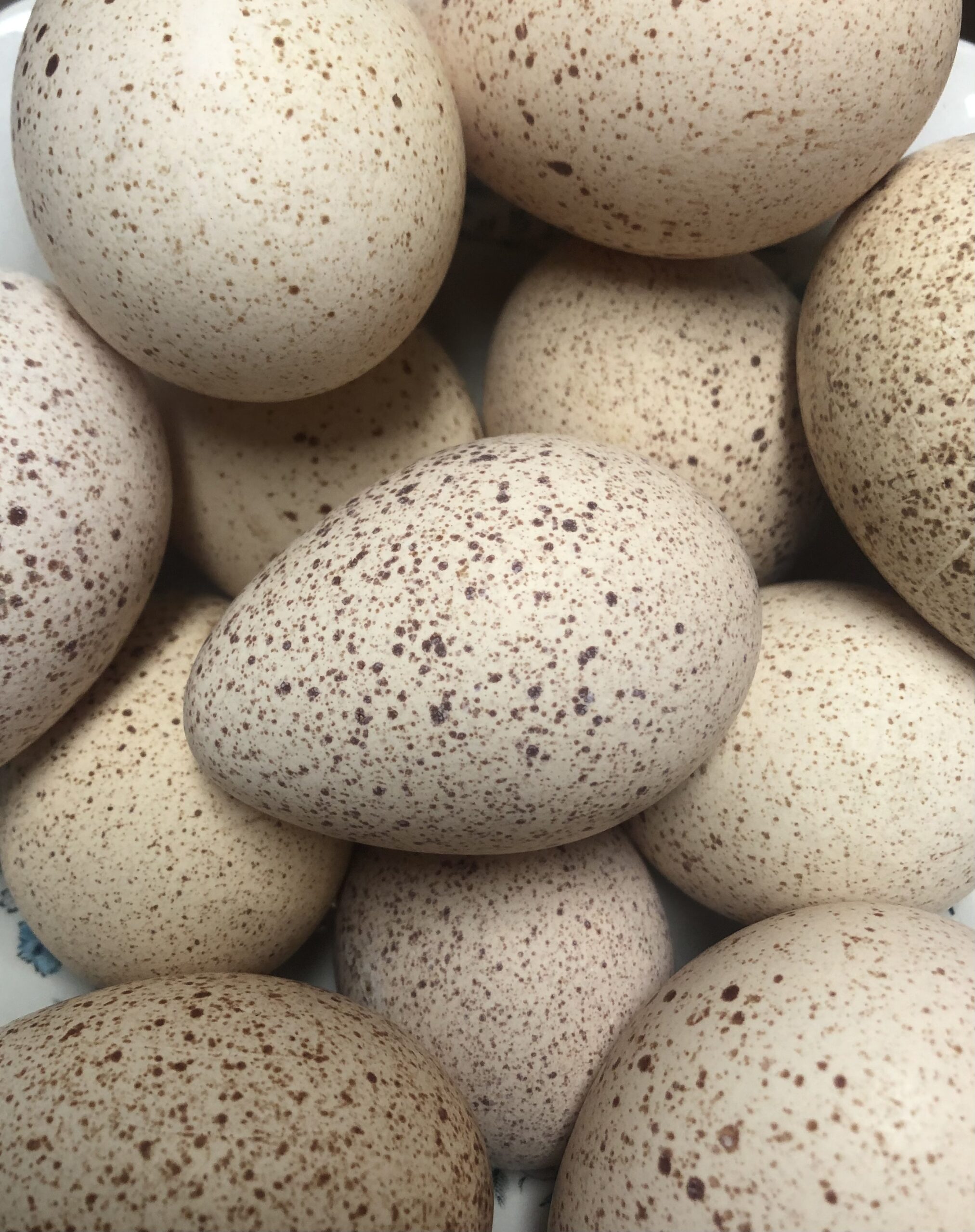



Turkey Eggs for Eating
Turkey eggs for eating perfect for your breakfast table, collected daily and shipped with care to preserve freshness. Turkey eggs are a premium, nutrient-dense alternative to chicken eggs—larger, richer, and prized by bakers and chefs for their creamy yolks; ideal for specialty food shops and farm-to-table customers across USA
Why Customers Choose Turkey Eggs for Eating
- Richer flavor and creamier texture — the higher yolk-to-white ratio gives a custardy mouthfeel that elevates omelets, custards, and sauces.
- Higher nutrient density — turkey eggs provide complete high-quality protein and meaningful amounts of vitamin B12, selenium, iron, and riboflavin.
- Great for baking and emulsions — yolks emulsify exceptionally well, improving cakes, ice creams, and mayonnaise.
Nutrition Highlights Per 100 g
- Protein: ~13–14 g
- Notable vitamins: B12, A, D, riboflavin
- Minerals: selenium, iron, calcium, zinc These values make turkey eggs a nutrient-rich choice for active households and gourmet cooks.
Culinary Uses and Tips
- Substitute ratio: Use 1 turkey egg ≈ 1.5 chicken eggs in recipes; adjust for volume in baking.
- Best preparations: Scrambled, omelets, quiches, custards, crème anglaise, and rich cakes. The yolk’s richness improves texture and flavor.
- Cooking tip: Crack carefully—thicker shells and stronger membranes mean cleaner separation but require a firmer tap.
Safety, Storage, and Sourcing of Turkey Eggs for Eating
- Store refrigerated and use within 3–4 weeks when kept cold; once opened, use within 2 days for best quality.
- Allergy and safety note: Egg proteins can trigger allergies; avoid raw consumption due to Salmonella risk—cook thoroughly or use pasteurized eggs for raw applications.
- Availability: Turkey eggs are less common than chicken eggs and often sold by specialty farms or local producers—ideal for farm-to-table retailers in USA.
Short FAQ
- Can I use turkey eggs in any recipe? Yes; increase volume proportionally (one turkey egg ≈ 1.5 chicken eggs).
- Are turkey eggs healthier than chicken eggs? They are richer per egg in some vitamins and minerals due to larger yolks, but both are nutritious.
Be the first to review “Eastern Wild Turkey Eggs for Eating – 12 Eggs”
Related products
Reviews
There are no reviews yet.